Sustainability & Innovation
Responsibility Stated As Principles, Not Badges
RED International holds no certification claims on this website. What follows are the goals, principles and intended standards we apply — and against which our partners are welcome to hold us.
Framework
Sixteen Principles Across Four Domains
Every principle below is written as a design and operating instruction, so that it can be tested during feasibility, design review and pre-opening readiness.
Environmental Design
Passive Design First
Orientation, shading, cross-ventilation, thermal mass and daylighting are resolved before mechanical systems are sized. Comfort should be an outcome of form, not only of energy.
Efficient Systems
Our intended standard is high-efficiency equipment, metered zones, heat-recovery where climate justifies it, and commissioning that verifies performance rather than assuming it.
Water Stewardship
Rainwater capture, low-flow fixtures, treated-water reuse for landscape, and drainage designed to reduce run-off pressure on surrounding communities.
Landscape & Biophilia
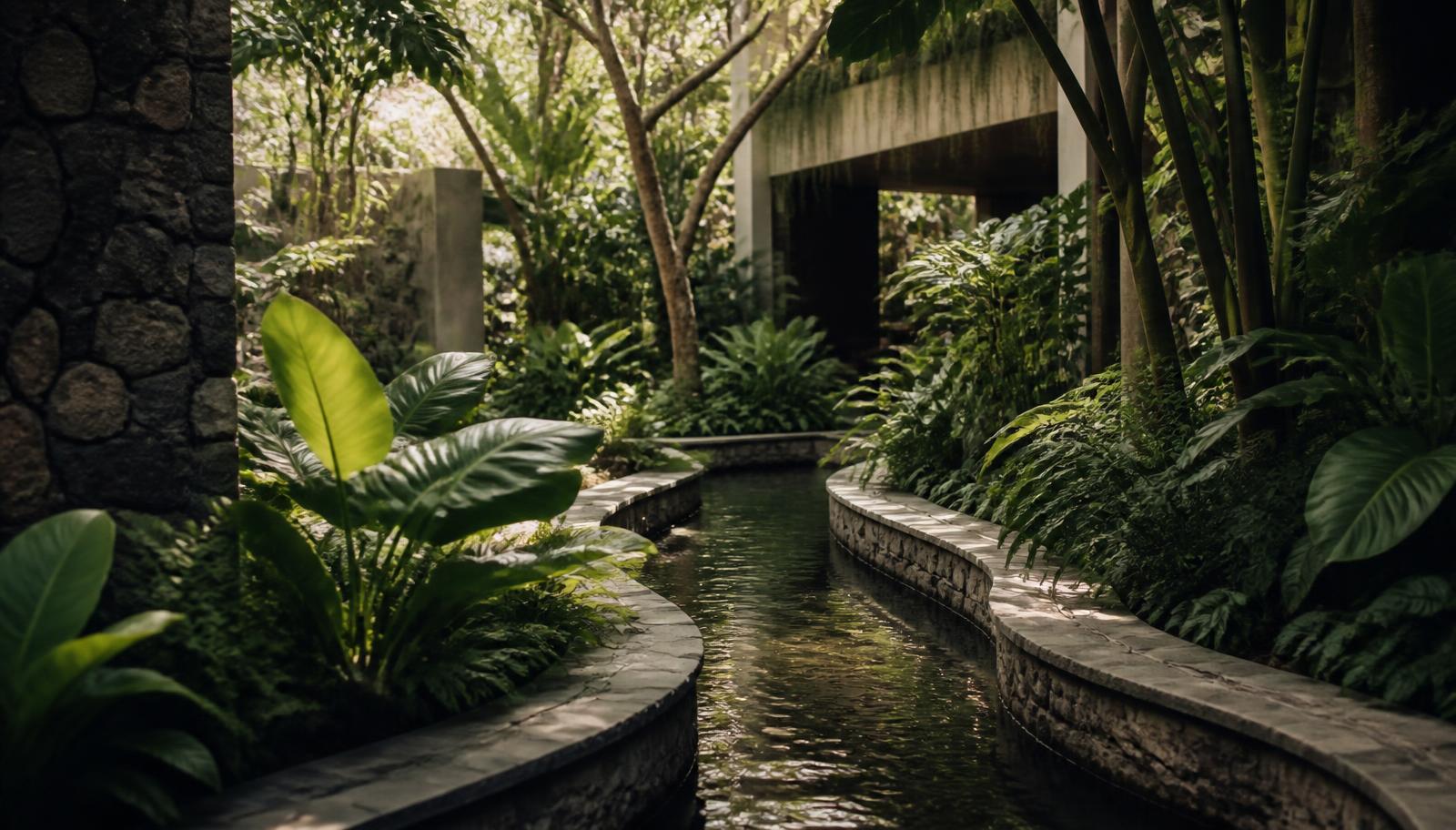
Native and climate-appropriate planting, shaded walking routes, therapeutic gardens, and canopy targets that make the outdoors usable through the day.
Human Environment
Indoor Environmental Quality
Ventilation rates, filtration, acoustic separation, glare control and low-emission materials are treated as health infrastructure for residents and staff alike.
Climate Resilience
Site selection and design account for storm, flood, heat and seismic exposure, with backup power, water storage and refuge planning appropriate to the region.
Universal Design
Level thresholds, generous circulation, contrast and legibility, seating rhythm, and fittings that work for a resident, a visitor and a member of staff without adaptation.
Aging in Place
Homes and campuses are planned so that increasing support can be delivered without relocation — a design goal with real consequences for structure, servicing and storage.
Smart Longevity
Smart Building Systems
Monitoring for energy, water, air quality and equipment condition, used to run the asset better rather than to collect data for its own sake.
Resident Technology
Optional assistive and wellbeing technology, chosen for dignity and simplicity, with clear consent and the ability to decline without penalty.
Privacy-Aware Systems
Data minimisation as a design principle: collect only what serves care or operations, retain it for defined periods, and be explicit about who can see it.
Operational Intelligence
Maintenance history, lifecycle records and service performance held in structured form so that stewardship survives changes of personnel.
Community & Supply Chain
Responsible Procurement
Preference for durable, repairable specification, regional supply where quality allows, and suppliers able to evidence their own labour and material practices.
Workforce Development
Training academies, structured career pathways and partnerships with local institutions, so that a destination raises local capability rather than importing it.
Community Integration
Publicly accessible dining, wellness and cultural components that connect a longevity destination to the city around it and avoid enclave planning.
Transparent Reporting
Our goal is to report progress against these principles in plain language, and to distinguish clearly between intention, in-progress work and verified outcome.
Lifecycle
From Site To Stewardship
Sustainability decisions are made early or not at all. This is the sequence in which we take them.
01
Site
Climate, hazard, ecology and community context assessed before acquisition or contribution.
02
Design
Passive strategy, universal design and operating model resolved together in the master plan.
03
Procurement
Specification, supplier standards and lifecycle cost weighed alongside capital cost.
04
Construction
Site environmental controls, waste discipline, labour standards and verification testing.
05
Operations
Commissioned systems, monitored performance, trained teams and documented service standards.
06
Stewardship
Planned maintenance, capital reserves, condition reporting and periodic re-assessment.
We make no claim to hold environmental certifications, ratings or awards. Where a project pursues a recognised standard, that intention will be stated as a target and only reported as achieved once independently verified.